Game Reviews
Brigador: Great Leader Is Dead, Solo Nobre Must Fall
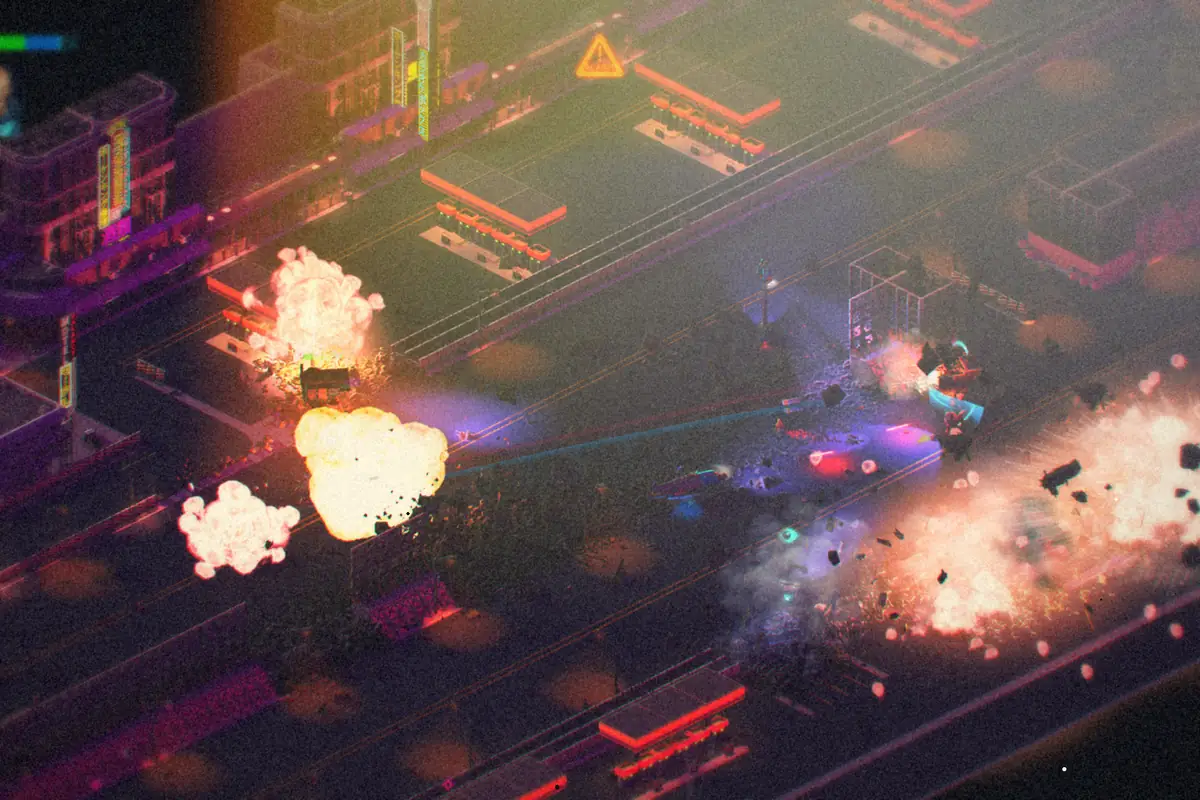
- Rating
- Platform
- Steam · 29 hrs
- 4.5 out of 5. About twenty-nine hours on record.
- Looks like a mindless destruction game. It's really about positioning, weapon range and picking your fights.
- Dozens of mechs, tanks and hovercraft that all handle differently, in fully destructible streets.
- The default controls feel wrong at first, and early progress is slow. Rebind and push through.
My Steam headline for this one was the game's own pitch: "Great Leader is dead. Solo Nobre must fall." Underneath I wrote that Brigador is a brutal tactical mech game where every mission leaves its mark on the city, and on your conscience.
It's the most recent review on my Steam list, and it's got more people finding it helpful than most of the others, which makes me think I'm not the only one who fell for it.
What it is
Solo Nobre is a dystopian city whose dictator just died. You're a mercenary pilot hired to tear it apart in the chaos. The view is isometric, and the whole city is lit in neon and synthwave. You pick a pilot, a vehicle and weapons, then go in and complete objectives while the place falls down around you.
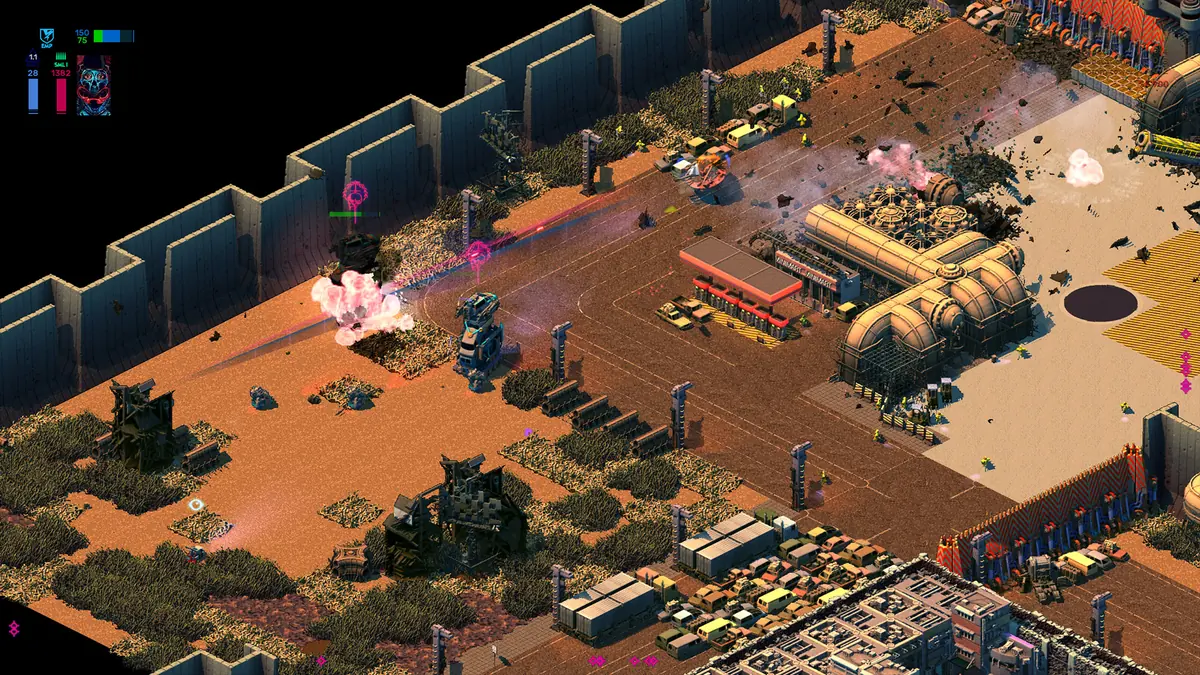
There are two main modes: a campaign with set loadouts and scenarios, and Freelance, where you choose everything and the payout depends on the difficulty and gear you pick.
What worked
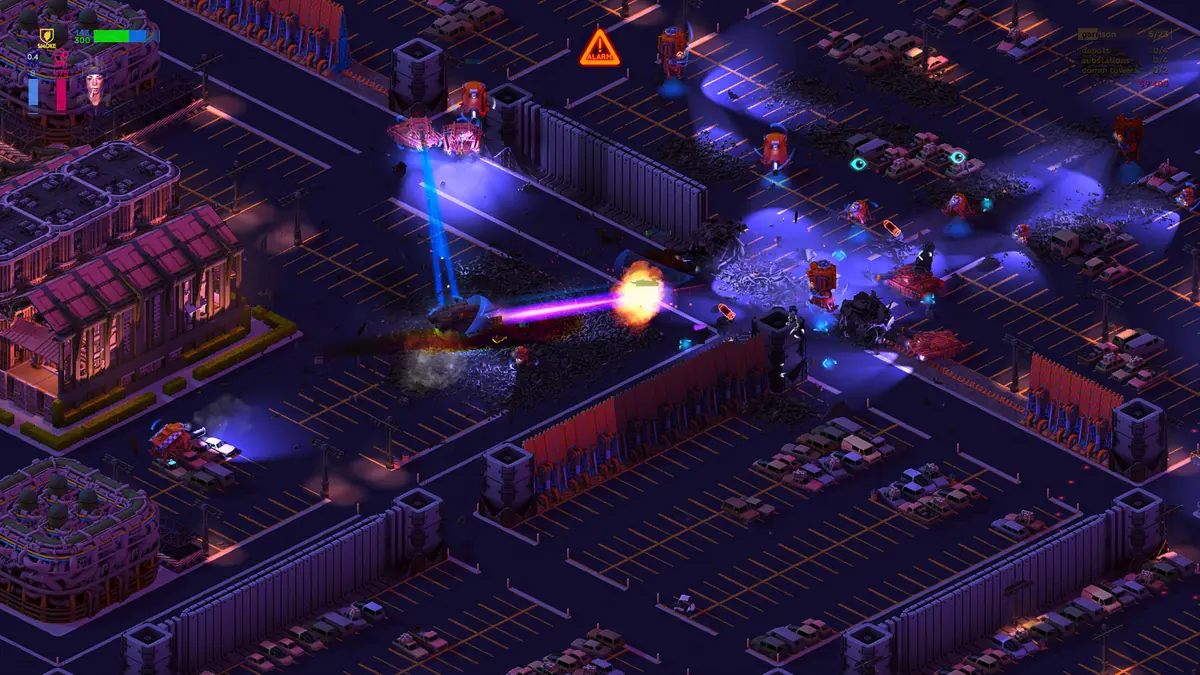
The tactics. Brigador isn't a mindless action game, whatever the screenshots say. Success depends on knowing your vehicle, your weapon ranges and the terrain. Noise matters too: loud weapons attract attention, so part of surviving is balancing aggression with a little stealth.
The vehicles. A long roster of mechs, tanks and hovercraft, each with its own handling and personality. Nimble scouts and lumbering tanks need completely different approaches.
The destruction. It's all destructible, and it changes how you play. Carve a new path through a building, or knock down the cover your enemies were counting on.
The atmosphere. The city tells its story through its environments with very little exposition. The synthwave soundtrack from Makeup and Vanity Set is outstanding, and the game doesn't look away from what your destruction means for the people living there.
Freelance mode. This is where it really shines. The risk-and-reward setup encourages you to experiment.
Tip
Try the other control schemes and rebind early. The default controls are the biggest reason people bounce off this game, and there are several alternatives.
What didn't
The learning curve. It's steep, and the default controls feel unintuitive.
Vague stats. Weapon and equipment numbers could be clearer.
Campaign loadouts. Story missions limit your options.
The early grind. Progress is slow until you unlock better equipment.
On the technical side it's in good shape. It runs on modest hardware, the pixel art and lighting hold up well, and controller support is good. Heavy destruction causes the occasional slowdown, and the physics get a little quirky now and then.
Worth it?
Yes, if you'll give it the time. The campaign is seven or eight hours, and there's plenty more in Freelance and the level editor. It's for players who like tactical combat built on positioning, complex vehicle and weapon choices, storytelling through the world, and a challenge that rewards planning.
If you like planning your approach before you open fire, Door Kickers is the same brain in a SWAT vest. For a bigger, louder power fantasy, there's Space Marine.