Book Writing
Falling Stars: An Early Draft, Posted While the Rewrite Happens
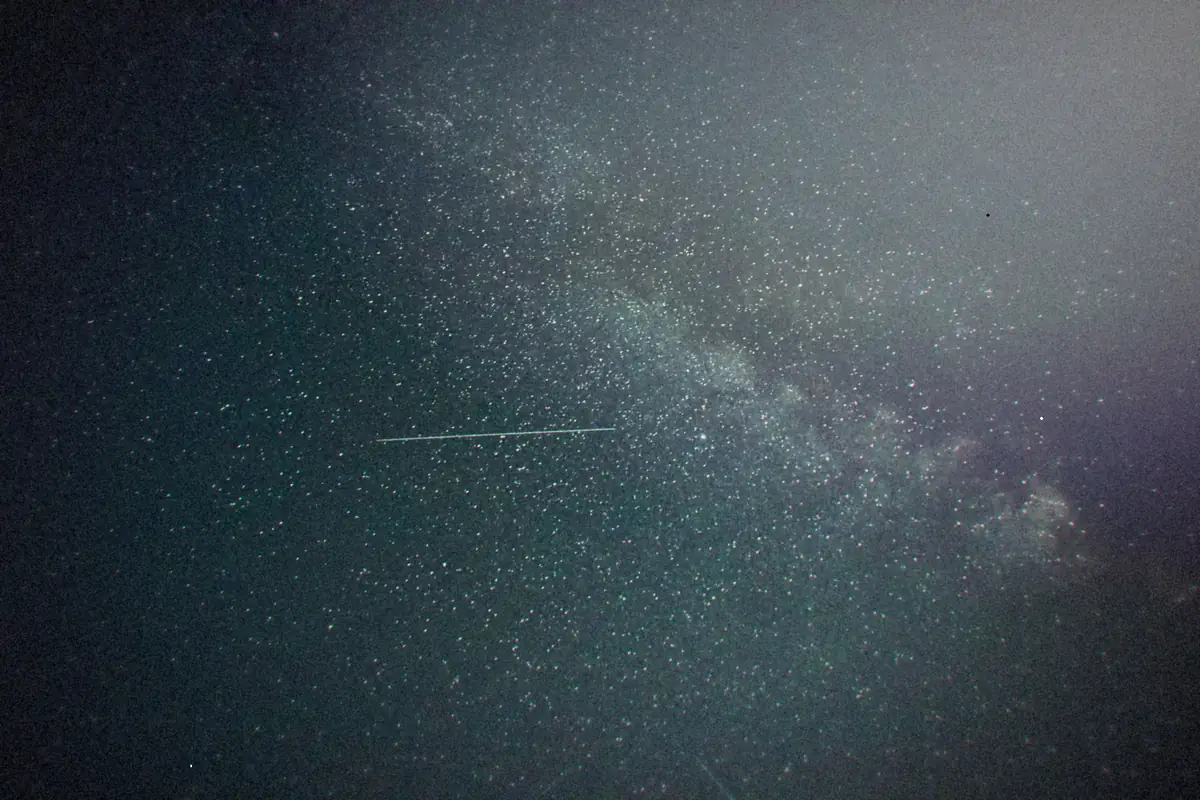
Part 4 of the thread Notes on the novels
- Falling Stars starts with one broken satellite and a debris cascade that strips Earth of everything we put in orbit.
- The full text on the site is an early complete draft: 42 chapters, about 65,000 words, running ten years past the disaster.
- A rewrite is under way with a new cast and a tighter focus on the people trapped in orbit. It'll replace this draft on the site.
- The early draft has loose ends, character names that drift partway through among them. I've left it as written.
Falling Stars is my Kessler Syndrome book. One satellite gets hit, its pieces hit other satellites, those pieces hit more, and within days the sky that runs our phones, maps, money and power grid is a shooting gallery nobody can fly through.
The complete draft is up, all 42 chapters, and you can read it here. Before you do, you should know it's an early draft, and I'm in the middle of rewriting the whole thing.
What the book is about
The question underneath it is simple: what are we, down here on the ground, once the stuff we built up there stops working? Not zombies, not nukes. Just physics, patiently doing what physics does to thousands of objects moving at eight kilometers a second.
In this draft the story starts aboard Dragon. Commander Jack Reynolds and his crew watch a communications satellite come apart, and their rookie, Chen, runs the numbers on what that means. It means a narrow channel through the debris and a twelve percent chance of getting home. Meanwhile the book keeps cutting to Denver, where a hospital maintenance chief named Marcus Thompson keeps the generators turning, a teenager named Lisa Park finds out her phone was never the useful part of her, and Colonel Foster draws lines on a map about who gets protected.
That ground-level half is what keeps the orbital stakes honest. The heroes of the collapse are the people who know how a diesel generator works, who can read a paper map, who can keep a ledger by hand. The draft follows them through a brutal first winter, a painful arrangement with Chinese engineers who arrive with power and conditions, and years of slowly rebuilding until people can reach orbit again, this time together.
How it's changed
It didn't start this way. The earliest version, from planning notes that go back to the summer of 2024, was a war story. China knocks out America's satellites, the country is thrown back to 1980s technology, and retired astronauts get pulled out of retirement to fly museum shuttles back into orbit. That version was about fighting.
This draft moved away from fighting and toward surviving. The real enemy became the debris, and the book stretched out to cover ten years instead of one battle.
The rewrite goes further in that direction. It's built around four people: Captain Sarah Lawson, commanding the International Space Station when the strike happens; Colonel Jack Graves, a near-retirement officer on the ground at NORAD; Dr. Emily Foster, a communications physicist in Houston; and General Wei Zhou, the Chinese commander who authorized a "limited" strike and has to live with what it turned into. The heart of it is the crew trapped in orbit, enemies the day before, having to dock with each other to stay alive. The rule for the whole book is the enemy is physics, not people. Zhou isn't a villain. He's a man who made a catastrophic mistake and spends the book trying to correct it.
The rewrite is also stricter about the science. Real debris cascades unfold over decades, not afternoons, so the story has to explain why this one moves so fast. And the ground-level half gets new anchors: a pregnant woman in Colorado Springs holding her neighborhood together as the grid dies, and an air-traffic controller in Atlanta talking blind planes down with binoculars and paper strips.
What's rough in this draft
Plenty, and I'd rather say so up front.
The big one is names. Characters change names partway through. The first half follows the Dragon crew and the people around Foster, and by the back third some of those same roles are being played by people with different names. A Chen changes first name, a Harrison shows up in a role that used to belong to someone else, and a couple of timelines don't quite line up. I haven't patched any of that. It's the draft as I wrote it, and sorting out who's who is one of the things the rewrite settles, starting with Lawson in the commander's seat.
The ending moves fast, too. The last ten chapters cover close to a decade, out to the Moon, Mars and further. It's the same trouble Night Swimming has, where the climax goes by in a rush after all that buildup.
Note
When the rewrite is done, it replaces this draft here. Until then, this is the version of the book that exists from start to finish.
What's still unfinished
The rewrite is planned at 41 chapters. About half of them are drafted and the rest are outlined. There are still decisions to make, like exactly where Zhou's sacrifice lands, and a cast list with too many people named Chen, which has to be cleaned up before anyone else has to keep track of them.
If you read the early draft, read it as the shape of the story rather than the finished thing: a satellite breaks, the lights go out, and ordinary people with practical skills end up carrying everyone else.