Retro Tech
Nintendo's Home Consoles, NES to Wii U: The Models Worth Knowing
Part 3 of the thread Console field guide
- The NES front-loader's 72-pin connector is its weak spot. The 1993 top-loader fixed that and dropped composite video.
- The N64's Expansion Pak doubles its memory, and two big games need it. Its analog sticks wear out.
- Only the first Wii model plays GameCube discs, which makes it the one to own.
- The Wii U sold poorly but started a lot of the Switch's biggest games, and its eShop closed in 2023.
Nintendo's home consoles each came in a few revisions, and the differences matter more now that they're all second-hand. Some models have a known weak spot, some dropped a feature you'll want, and one Wii model is quietly two consoles in one.
This is the family at a glance, then the notes for each. The Super Nintendo gets its own comparison, because its two models deserve the space.
The lineup
| Console | Released | Discontinued | Sold (about) |
|---|---|---|---|
| Famicom / NES | 1983 in Japan, 1985 in North America | 1995 (NA), 2003 (Japan) | 61.9 million |
| Super Nintendo | 1990 in Japan, 1991 in North America | 2003 (Japan) | 49 million |
| Nintendo 64 | 1996 | 2002 | 32.9 million |
| GameCube | 2001 | 2007 | 21.7 million |
| Wii | 2006 | 2013 | 101.6 million |
| Wii U | 2012 | 2017 | 13.6 million |
| Switch | 2017 | More than 150 million |
NES and Famicom
A Ricoh chip built around a 6502 at 1.79 MHz, a 256 x 240 picture, and cartridges.
| Model | What to know |
|---|---|
| Famicom (1983) | Red and white, controllers wired in, an expansion port on the front |
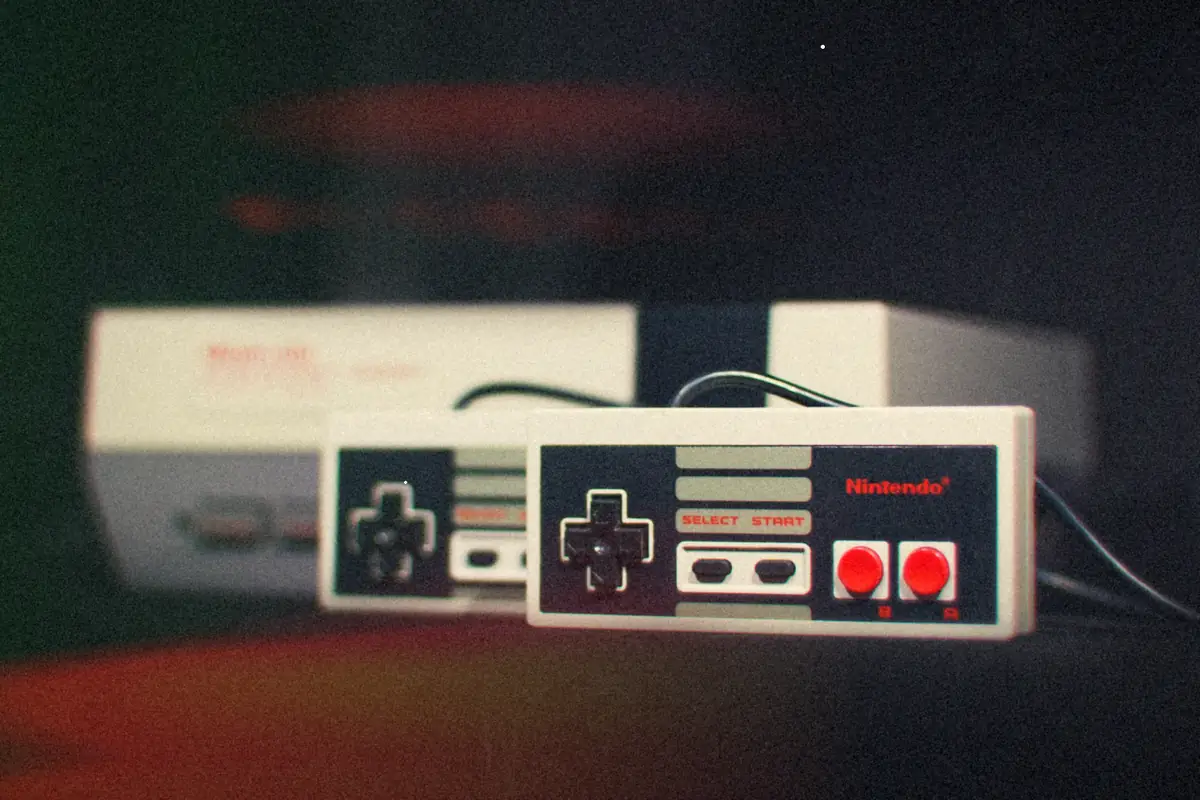
| NES front-loader (1985) | The gray toaster. The 72-pin connector that grips the cartridge wears out, which is where the blinking screen comes from |
| NES top-loader, NES-101 (1993) | A more reliable connector and no lockout chip, but RF video only. Composite needs a mod |
| AV Famicom and Twin Famicom | The Japanese variants with better video out. The Twin, made by Sharp, has the disk system built in |
The mods people do: replace the 72-pin connector on a front-loader (the cheapest fix for the blinking), fit an NESRGB board or swap in an RGB graphics chip for a clean picture, and use an EverDrive N8 Pro flash cartA cartridge with an SD card slot that plays game backups on the original console. The EverDrive is the best-known one.More: Preserving Your Own Game Collection: Dumps, Backups, Boxes and Old Hardware to play your own dumps on the real thing.
Nintendo 64
An NEC VR4300 at 93.75 MHz, cartridges from 4 to 64MB, the analog stick that set the pattern for 3D games, and four controller ports built in.
- The Expansion Pak doubles the memory to 8MB. Donkey Kong 64 and Majora's Mask need it, and some other games use it for a sharper picture.
- The 64DD was a Japan-only disk drive add-on that sold only around 15,000 units.
- Stick wear. The stock stick uses plastic parts grinding against plastic, and it loosens with time. GameCube-style replacement sticks are the usual fix.
- Video. Composite and S-VideoA video connection that keeps brightness and color on separate wires. A clear step up from composite, one step below RGB.More: RGB and Retro Consoles: Which Ones Need a Mod and Which Just Need a Cable as standard. RGB needs a mod, and the early NTSC boards are the easiest to do it on. It's the biggest picture upgrade the system can get.
Note
The N64 has long been the hardest console of its generation to emulate accurately, because of how its graphics chips were programmed. It's much better now: ares, simple64 and the ParaLLEl-RDP renderer in RetroArch are the names to know.
Wii
An IBM Broadway CPU at 729 MHz, 480p at most over component cables, and no HDMI at all.
| Model | What to know |
|---|---|
| RVL-001 (2006) | Plays GameCube discs, with four GameCube controller ports and two memory card slots |
| RVL-101 (2011) | GameCube support removed |
| Wii mini (2012) | No GameCube support, no internet, no SD card slot, top-loading |
The RVL-001 is the one to own. It's a Wii and a GameCube in one box.
It also has one of the most mature homebrew scenes of any console. The Homebrew Channel is well documented and can be removed again, and from there you get Nintendont for GameCube games from SD or USB, USB Loader GX, WiiFlow and a version of RetroArch. For a modern TV, use an upscalerA box that takes an old console's low-resolution signal and turns it into something a modern TV displays cleanly, ideally without adding lag.More: RGB and Retro Consoles: Which Ones Need a Mod and Which Just Need a Cable or one of the small Wii-to-HDMI adapters.
Wii U
An IBM Espresso CPU at 1.24 GHz, finally 1080p over HDMI, and 25GB proprietary discs.
- Basic set (white): 8GB of storage. Deluxe set (black): 32GB. Neither is enough, so an external USB drive is pretty much required.
- It plays Wii games natively and supports the Wii Virtual Console.
It was Nintendo's weakest-selling home console, but it's where a lot of the Switch's biggest games started: Breath of the Wild, Mario Kart 8, Splatoon, Super Mario 3D World and Bayonetta 2. Most of those were ported later.
Heads up
The Wii U and 3DS eShops closed in March 2023. Digital-only games that never got ported can't be bought anywhere now. If you have them installed, back them up while the console still works.
For homebrew, Aroma is the current environment, replacing the older Tiramisu and Homebrew Launcher setups.
If you're buying one now
- NES: a front-loader with a fresh 72-pin connector, or a top-loader if you'll mod it for composite.
- N64: check the stick, and get an Expansion Pak.
- Wii: an RVL-001 with the GameCube ports.
- Wii U: either set, plus an external drive.
Nintendo's handhelds get the same treatment in the Game Boy to 3DS lineage.